
Meteopro: Italian weather, from the radar to the clouds in three dimensions
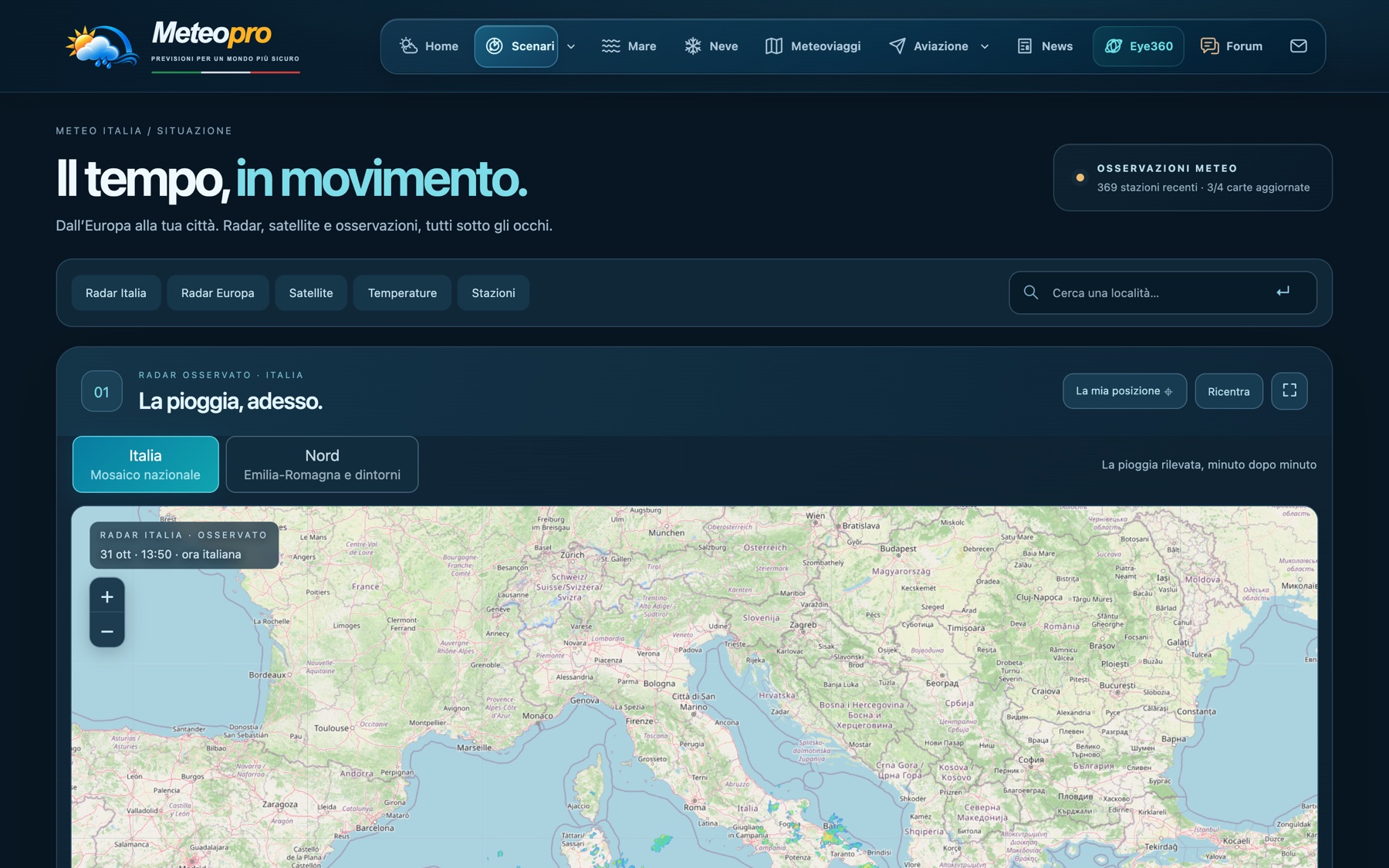
A weather portal built from scratch, with an engine that collects the data of the major forecasting centres on its own and shows it for what it is: real observations, declared models, no invented numbers. It runs on meteopro.it.
01
Why another weather site
There are countless weather sites, and almost all of them look alike: a sun or cloud icon, a temperature, a chance of rain. Where those numbers come from, which model computed them and when, usually nobody says. For people who really need to understand the weather, those who go to sea, fly, work outdoors or simply want to know whether tomorrow is a day for the mountains, that icon is not enough.
Meteopro starts from there. The idea was a portal that shows the weather in Italy with the same seriousness professionals use, while staying readable for everyone. One rule has guided it from the first day: no simulated data and no number produced by an artificial intelligence without a basis. If a model reaches ten days, the forecast stops at ten days, and if a series has a gap, the gap shows.
02
The engine
Behind the site there is an engine that works on its own, day and night. Dozens of automatic collectors fetch data from the centres that produce it: the European ECMWF model, the American GFS model, the German ICON-EU, the WAFS aviation charts, the METAR observations from airports, the rain radars, the satellite and the earthquakes recorded by INGV. Every piece of data is checked before it is published, and whatever fails the checks stays out instead of being patched up.
Models say what should happen, but the real weather is what you see outside. That is what Eye360 is for: about 1,200 webcams all over Italy, from cities to coasts and mountains, showing what is really happening on the ground. If the radar shows rain over a valley or the model expects snow on a pass, one click shows how it really is right now.
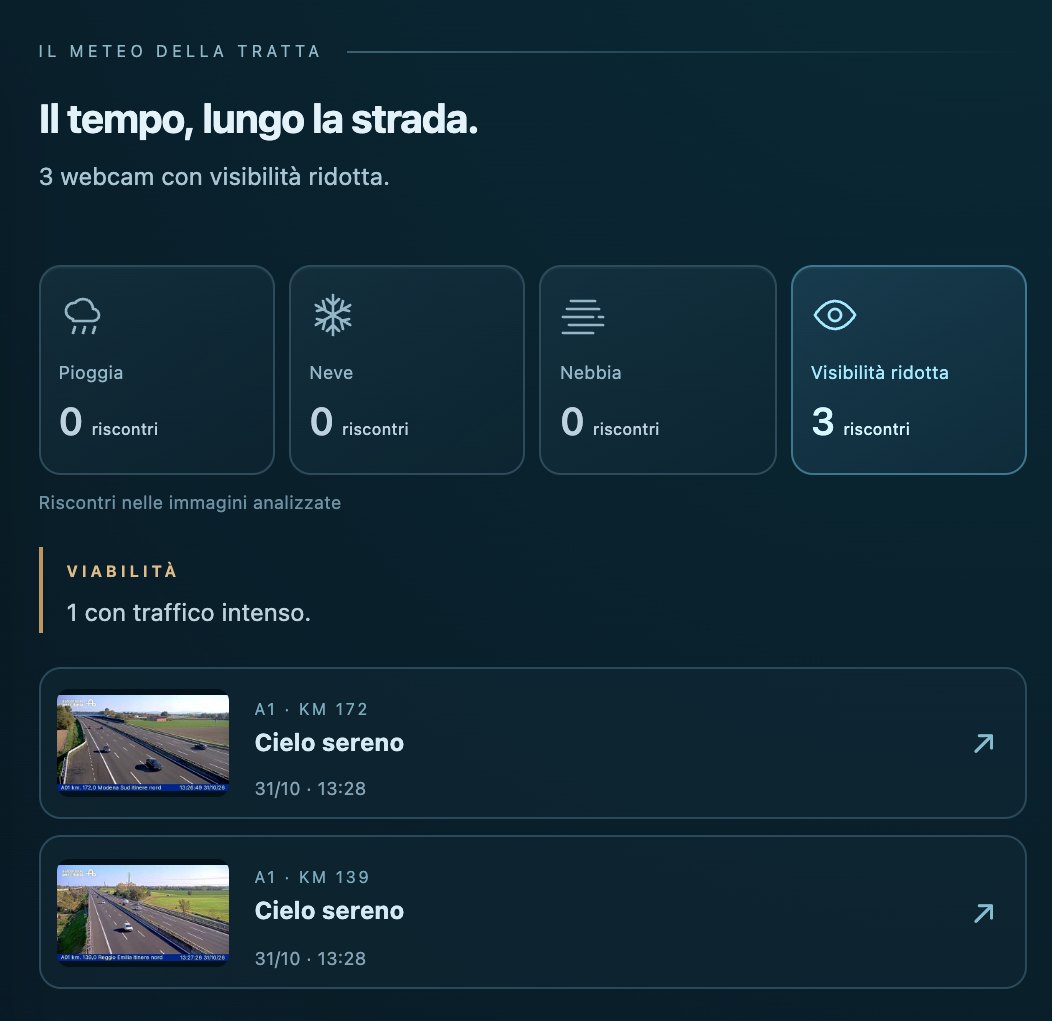
But the webcams are not only watched by visitors. An artificial intelligence model analyses them on its own at every scan: it recognises rain, snow, fog, reduced visibility and heavy traffic, and when it finds something it reports it on the home page together with the webcam images that show it. The first stretch observed this way is the Autostrada del Sole between Milan and Bologna, read every five minutes: a pilot project that brings what is really happening on the road next to the forecast.
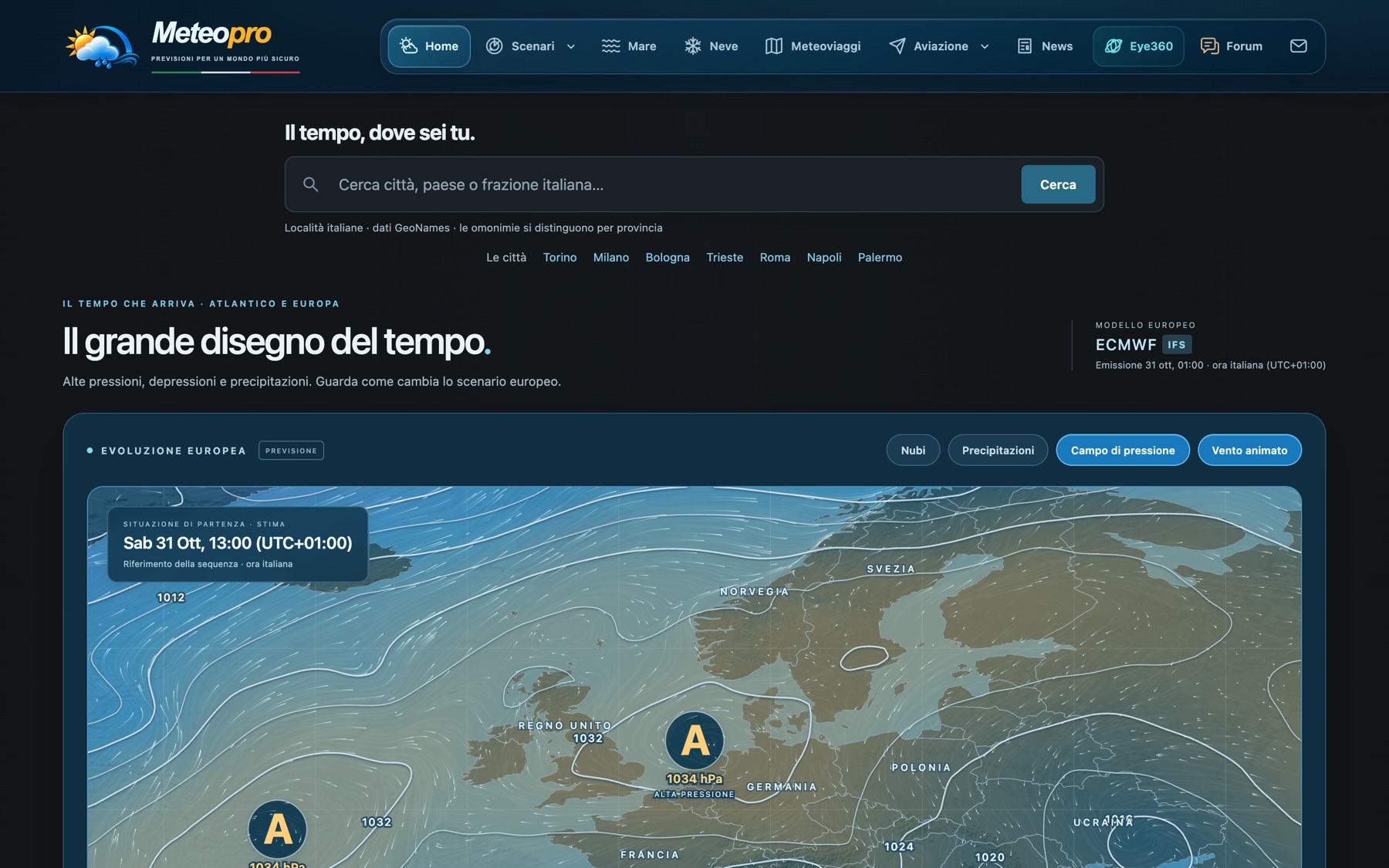
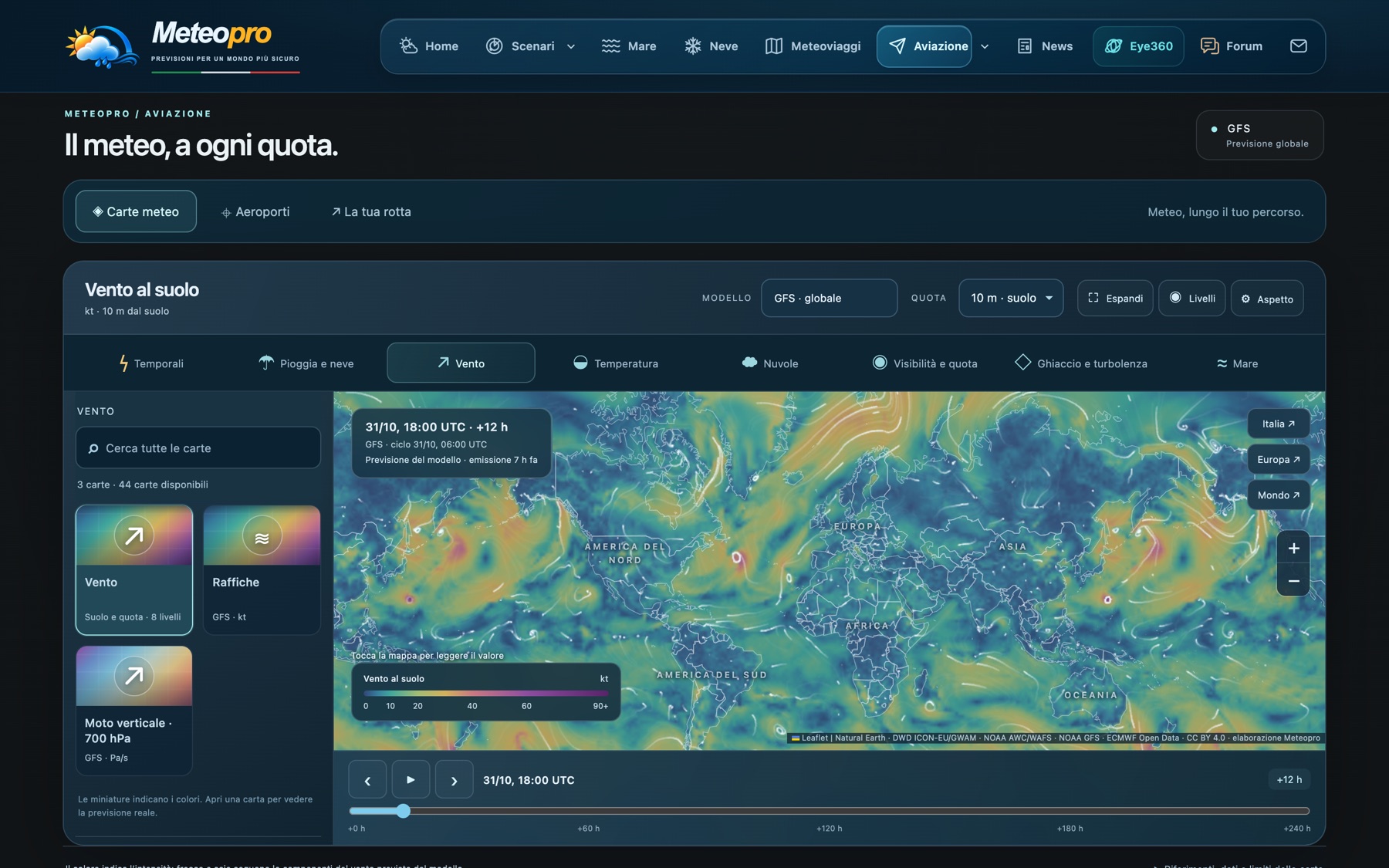
The search knows 62,968 Italian towns and villages, so you find the smallest place and not just the big cities. Every chart says which model it comes from, which run, and the time it is valid for. The Aviation section brings the same rigour aloft: wind, thunderstorms, clouds, visibility, icing and turbulence at flight levels, up to ten days ahead.
03
The atmosphere in three dimensions
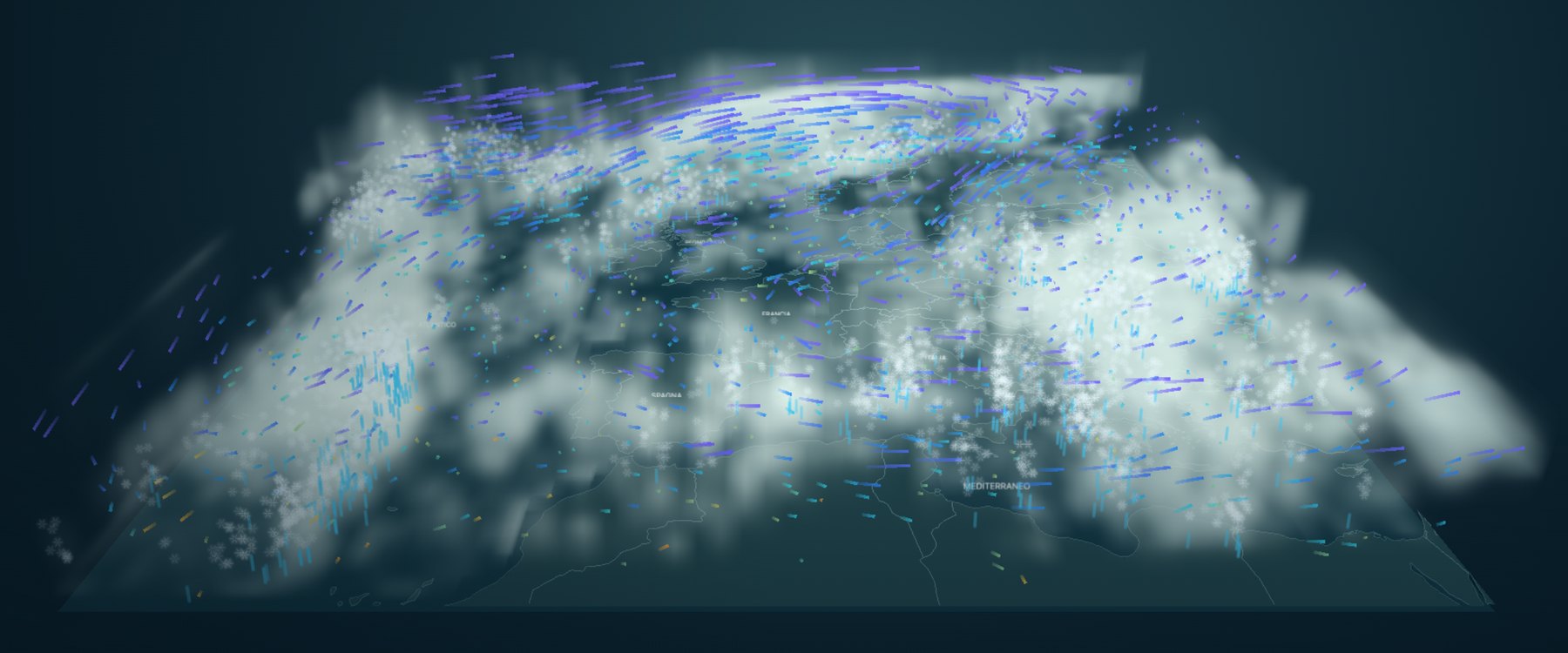
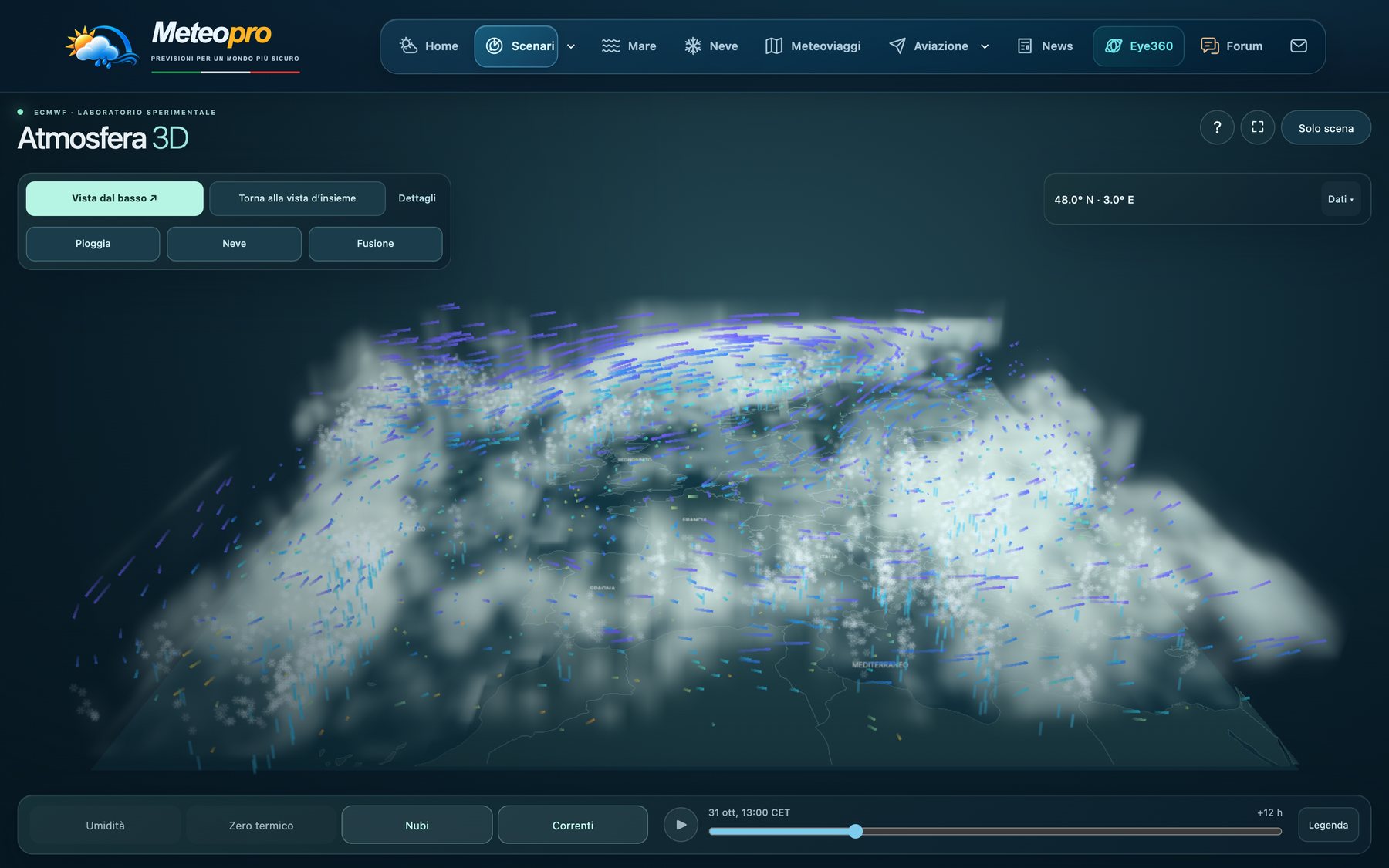
The part I am proudest of is called Atmosphere 3D. The ECMWF model describes the atmosphere as a volume, layer after layer, from the ground up to jet stream level. Usually that volume is sliced into many flat charts, one per level. Here you look at all of it at once, in three dimensions, in the browser, and turn it with the mouse.
Press Clouds and the real clouds forecast by the model appear over Europe, with rain and snow falling where the model expects them. You can look at the volume from above or from below, move through the coming hours and watch the cloud systems travel. Other views show humidity, the currents aloft and the surface of the freezing level, the height at which the air drops below zero. Everything is computed by the graphics card from the model's real data: heights and temperatures are never retouched to look better.
Meteopro is a BlackOrder Studio project, and it is the kind of work we enjoy most: a lot of real data, collected and checked without pause, made simple to look at. The site is open to everyone, has a forum for weather enthusiasts and keeps growing. The site itself is in Italian.
Discover Meteopro
Radar, satellite, ECMWF and GFS models, aviation charts and the atmosphere in 3D. Free, no sign-up.
Visit meteopro.itMore from the codex
Discussion 0 comments
No comments yet. Start the conversation.